
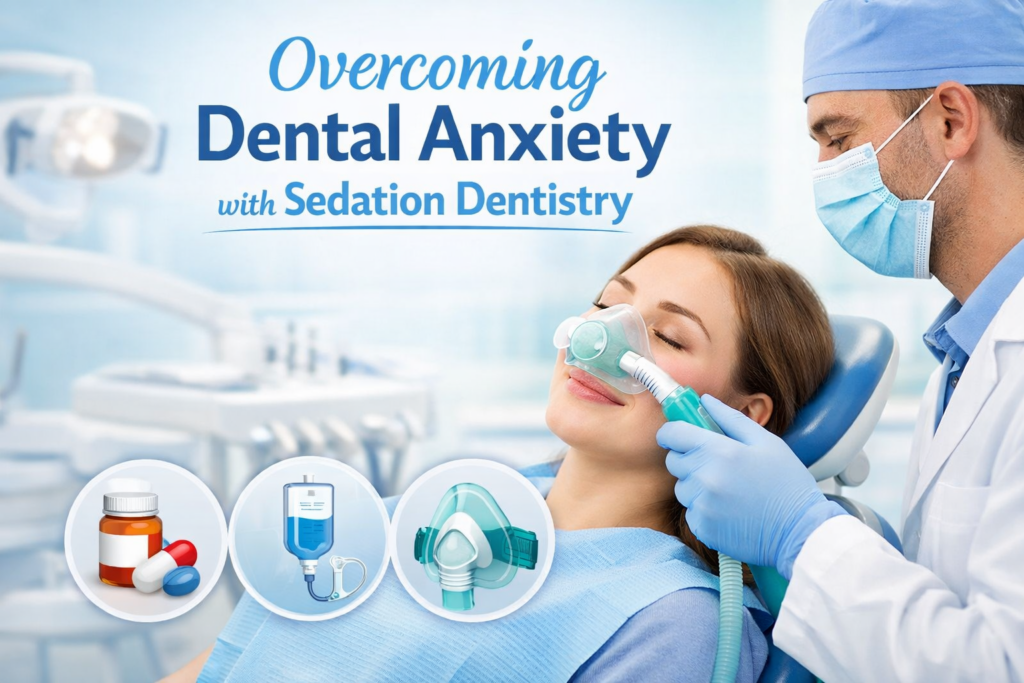
If the thought of sitting in a dental chair makes your palms sweat or your heart race, you are far from alone. Studies suggest that between 30 and 40 percent of Canadians experience some level of dental anxiety, and roughly 1 in 10 have a severe dental phobia that keeps them from visiting the dentist entirely.
The problem is that avoiding dental care does not make dental problems go away. It makes them worse. A small cavity that could have been treated with a simple filling can turn into a painful infection that requires a root canal or even an extraction. The longer you wait, the more complex and uncomfortable the treatment becomes.
That is exactly why sedation dentistry exists. At Affinity Dental in Winnipeg, our team offers several sedation options tailored to your comfort level and the type of procedure you need.
What Causes Dental Anxiety?
Dental anxiety can stem from many different experiences and triggers:
– A negative or painful dental experience in childhood
– Fear of needles, drills, or the sounds associated with dental work
– Feeling a loss of control while reclined in the dental chair
– Embarrassment about the current state of your teeth
– A strong gag reflex that makes procedures uncomfortable
– General anxiety disorders that extend into medical and dental settings
Whatever the cause, dental anxiety is real and valid. Sedation dentistry works with your fears so you can still get the care your teeth and gums need.
Understanding Your Sedation Options in Winnipeg
Nitrous Oxide (Laughing Gas)
Nitrous oxide is inhaled through a small mask placed over your nose and produces a feeling of calm relaxation within minutes. Once the mask is removed, the effects dissipate within a few minutes. You can drive yourself home and return to your normal routine the same day.
Nitrous oxide is ideal for patients with mild to moderate anxiety, shorter procedures, or those who want to remain fully conscious during treatment. It is also commonly used for children who feel nervous during dental visits.
Oral Sedation
Oral sedation involves taking a prescribed medication, typically a benzodiazepine, about 30 to 60 minutes before the procedure. You will feel deeply relaxed and possibly drowsy, but you will still be conscious and able to respond to instructions. Many patients remember very little of the procedure afterward.
You will need someone to drive you to and from your appointment. Oral sedation works well for patients with moderate to severe anxiety, longer procedures, or multiple treatments being completed in a single visit.
IV Sedation
Intravenous sedation delivers medication directly into your bloodstream, allowing the dentist to precisely control the level of sedation throughout the procedure. Most patients feel as though they slept through the entire procedure and have little to no memory of it.
IV sedation is typically reserved for patients with severe dental phobia, complex or lengthy procedures such as oral surgery or multiple extractions, or patients who have not responded well to lighter sedation.
How to Know Which Sedation Level Is Right for You
Choosing the right method is a conversation between you and your dentist:
– How severe is your anxiety? Mild nervousness may only need nitrous oxide. Panic-level fear may warrant oral or IV sedation.
– What procedure are you having? A routine cleaning may only need nitrous oxide, while wisdom tooth removal or oral surgery may warrant deeper sedation.
– Do you have a strong gag reflex? Sedation can help suppress it.
– How long is the procedure? Longer appointments benefit from oral or IV sedation.
What to Expect During a Sedation Dentistry Appointment
Before your appointment, your dentist will review your medical history and discuss your sedation options. If oral sedation is chosen, you will receive instructions on when to take the medication.
Throughout the procedure, your vital signs are monitored continuously. The dental team checks your heart rate, oxygen levels, and blood pressure at regular intervals.
After the procedure, nitrous oxide recovery is almost immediate. For oral and IV sedation, you will need someone to drive you home.
Sedation Is Not Just for Major Procedures
Sedation can be used for virtually any dental procedure, including:
– Routine dental cleanings
– Cosmetic procedures like teeth whitening or veneers
If anxiety has been preventing you from getting any type of dental care, sedation can help you catch up on the treatments you have been putting off.
Tips for Managing Dental Anxiety Beyond Sedation
– Communicate openly with your dental team about your anxiety
– Agree on a hand signal to pause the procedure
– Bring headphones and listen to music or a podcast
– Practice deep breathing exercises before and during your visit
– Schedule morning appointments
– Start small with a consultation or cleaning first
If you have been experiencing tooth pain but avoiding the dentist, read our guide on managing emergency tooth pain before your appointment.
You Deserve Dental Care That Works With Your Comfort Level
Dental anxiety should not stand between you and a healthy smile. At Affinity Dental, our Winnipeg dental team is experienced in working with anxious patients of all ages.
Have questions? Read our article on the top 5 most commonly asked questions about sedation dentistry, or contact our team to book a consultation.
Sources: