
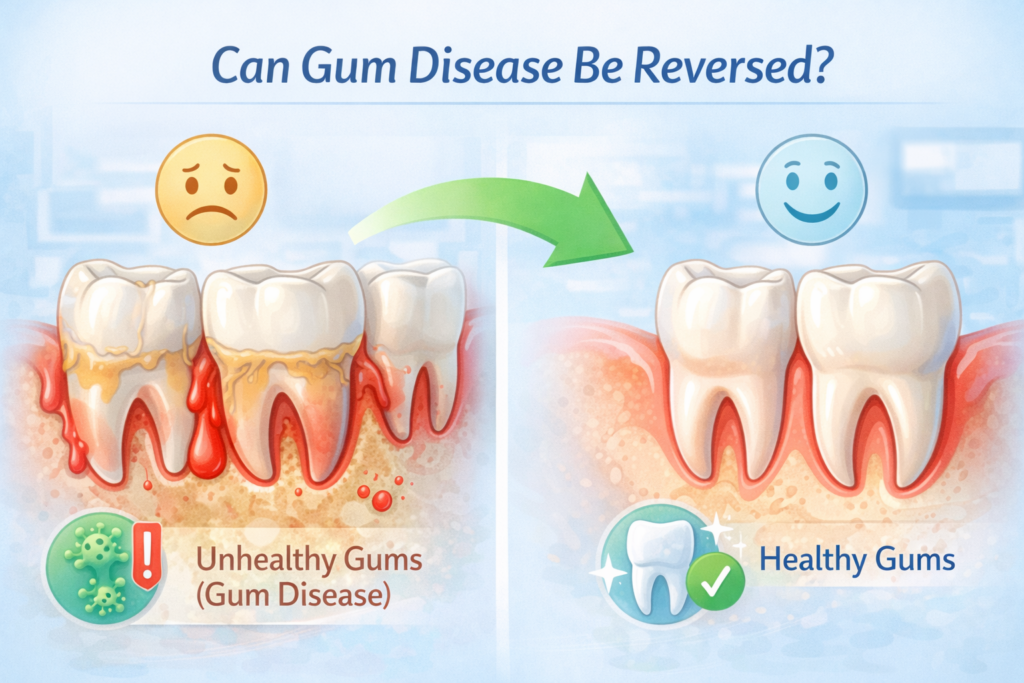
The Short Answer: It Depends on the Stage
Whether gum disease can be reversed depends entirely on how far it has progressed. Gingivitis, the earliest stage, is fully reversible with proper care. Periodontitis, the advanced stage, is not reversible but it can be managed.
Reversing Gingivitis
Gingivitis is inflammation of the gums caused by plaque buildup. At this stage, the infection has not reached the bone, so the damage can be fully healed.
Steps to Reverse Gingivitis
- Professional dental cleaning: A hygienist will remove plaque and hardened tartar that you cannot remove with brushing alone. Book a cleaning at Affinity Dental.
- Improved brushing technique: Brush twice daily for two minutes. Angle the bristles at 45 degrees toward the gum line.
- Daily flossing: Removes plaque from between teeth and below the gum line where brushes cannot reach.
- Antimicrobial mouthwash: Your dentist may recommend chlorhexidine or cetylpyridinium chloride.
- Regular dental visits: Returning for checkups every 6 months ensures plaque does not rebuild.
Most patients see significant improvement within 2 to 3 weeks. If your gums are currently bleeding, learn more in our article on bleeding gums: causes and treatment.
Managing Periodontitis
Once gum disease has progressed to periodontitis, treatment focuses on stopping further destruction and preserving remaining teeth.
Non-Surgical Treatment
Scaling and root planing removes tartar from below the gum line and smooths root surfaces.
Periodontal Maintenance
You will transition to cleanings every 3 to 4 months instead of every 6 months.
Surgical Treatment for Advanced Cases
- Flap surgery (pocket reduction)
- Bone grafts to regenerate lost bone
- Guided tissue regeneration
- Soft tissue grafts to cover exposed roots
In cases where teeth cannot be saved, dental implants or dentures can replace them.
The Role of Lifestyle Changes
Quit smoking: Smokers are 2 to 3 times more likely to develop periodontitis, and smoking impairs healing.
Manage diabetes: Uncontrolled blood sugar increases inflammation throughout the body.
Eat well: A diet rich in vitamin C, vitamin D, calcium, and omega-3 fatty acids supports gum health. For more on how food affects oral health, read our article on the worst foods and beverages for your teeth.
How to Protect Your Gums Going Forward
- Brush twice daily with fluoride toothpaste
- Floss every day without exception
- Use an electric toothbrush if manual brushing has not been effective
- Stay hydrated to maintain saliva production
- Attend every scheduled dental appointment
Protecting your enamel is equally important. Read our tips on protecting your tooth enamel.
Do Not Wait for Symptoms to Get Worse
If you are unsure whether your symptoms are serious, review our guide on signs it is time to see a dentist.
Contact Affinity Dental to schedule a gum health assessment at our Bridgwater or Henderson Highway clinic.