
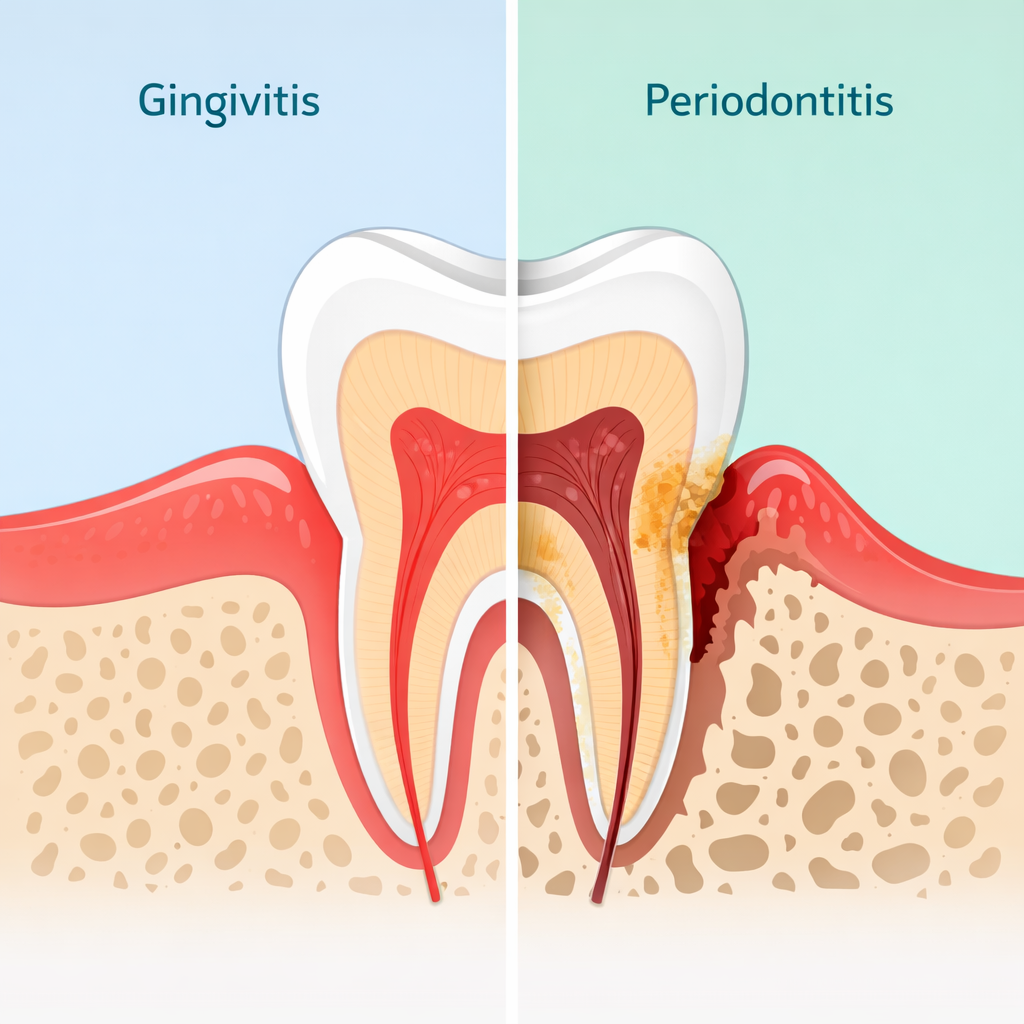
Gum Disease Affects Nearly Half of All Adults
Gum disease is one of the most common oral health conditions, yet many people do not realize they have it until it has already progressed. The distinction between gingivitis and periodontitis matters because one is reversible and the other is not.
What Is Gingivitis?
Gingivitis is the earliest stage of gum disease. It occurs when plaque builds up along the gum line and causes inflammation.
Common signs of gingivitis include:
- Gums that bleed when you brush or floss
- Red, swollen, or puffy gums
- Gums that feel tender to the touch
- Persistent bad breath
The encouraging news is that gingivitis is fully reversible. With improved brushing and flossing habits and a professional dental cleaning, the inflammation can resolve and your gums can return to a healthy state.
For more on bleeding gums, read our article on bleeding gums: causes and treatment.
What Is Periodontitis?
If gingivitis is not treated, it can progress to periodontitis, a more serious form affecting the bone and connective tissues that hold your teeth in place.
Early Periodontitis
Pockets between teeth and gums deepen to 4 to 5 millimetres. Bone loss begins.
Moderate Periodontitis
Pockets deepen further (5 to 7 millimetres). Teeth may begin to feel slightly loose.
Advanced Periodontitis
Pockets exceed 7 millimetres. Severe bone loss can lead to visibly loose teeth and eventual tooth loss. Treatment may involve oral surgery.
Unlike gingivitis, the damage caused by periodontitis is not fully reversible.
Risk Factors That Accelerate Gum Disease
- Smoking and tobacco use (the single greatest risk factor)
- Uncontrolled diabetes
- Stress
- Genetics and family history
- Poor nutrition
- Teeth grinding (bruxism)
- Hormonal changes during pregnancy, puberty, or menopause
- Medications that cause dry mouth
Treatment Options
For Gingivitis
- Professional dental cleaning
- Improved at-home oral hygiene
- Antimicrobial mouthwash
- Regular dental checkups
For Periodontitis
- Scaling and root planing (deep cleaning)
- Antibiotic therapy
- Periodontal maintenance cleanings every 3 to 4 months
- Surgical options for advanced cases
If gum disease leads to tooth loss, replacement options such as dental implants or dentures may be discussed.
How to Prevent Gum Disease
- Brush twice daily with fluoride toothpaste, paying attention to the gum line
- Floss daily
- Replace your toothbrush every 3 to 4 months
- Avoid smoking
- Eat a balanced diet and limit sugary snacks
- Visit your dentist regularly for cleanings and checkups
Protecting your tooth enamel is also part of overall oral health. Read our tips on protecting your tooth enamel.
Do Not Ignore the Early Warning Signs
If you notice bleeding gums, persistent bad breath, or changes in how your teeth fit together, schedule an appointment. Early intervention is the difference between reversing gingivitis and managing a chronic condition.
Contact Affinity Dental to schedule a gum health evaluation. Not sure if your symptoms warrant a visit? Read our guide on signs it is time to see a dentist.