
TL;DR
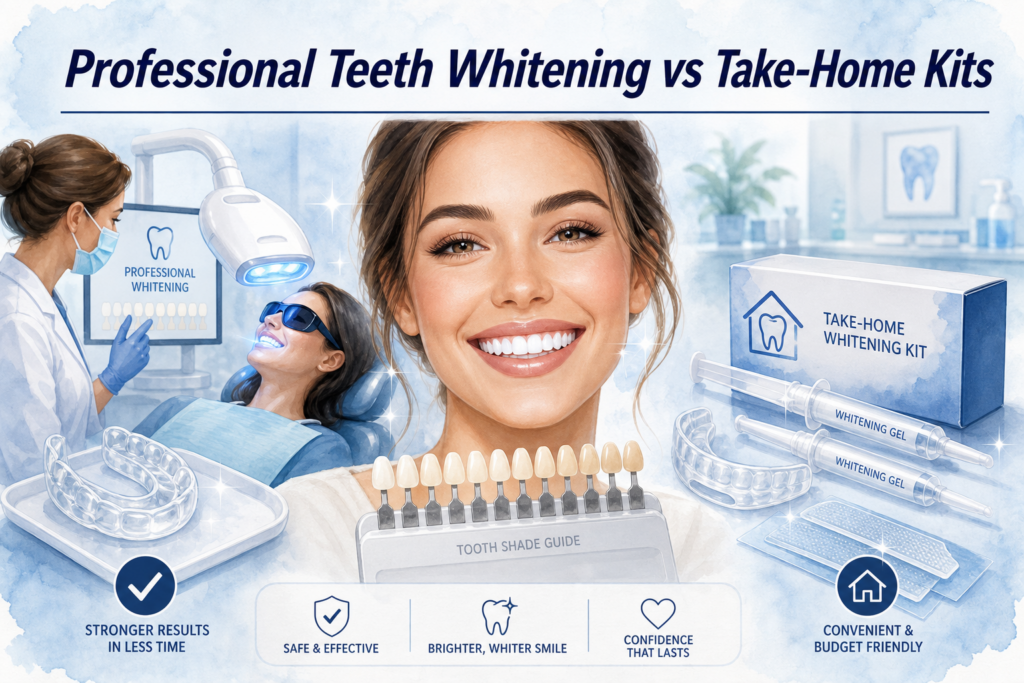
- Professional whitening can deliver more even, predictable results than many at-home products.
- Sensitivity, existing dental work, and the type of staining all affect which whitening option makes sense.
- A dental exam can help you avoid wasting time on products that are not a good fit.
Teeth Whitening Comparison
| Option | What Patients Should Expect |
|---|---|
| Professional whitening | Faster, stronger, and more supervised results |
| Take-home kits | More gradual results with variable effectiveness |
| Best next step | Review whitening options with a Winnipeg dentist |
Not All Whitening Options Deliver the Same Results
If you want a brighter smile, you have probably seen plenty of whitening products online and in stores. Strips, trays, pens, toothpastes, and social media trends all promise a whiter smile. Some help a little. Some disappoint. A few can even leave your teeth feeling more sensitive than you expected.
That is why many patients ask whether professional whitening is really better than an over-the-counter option. The answer depends on your goals, your timeline, and the current condition of your teeth.
At Affinity Dental, patients considering teeth whitening in Winnipeg often want to know what actually works, what is safest, and what kind of result they can realistically expect.
Why Teeth Become Discoloured
Teeth do not all stain for the same reason. Discolouration can happen because of coffee, tea, red wine, tobacco, aging, certain medications, or natural enamel wear over time. Some stains sit on the surface. Others are deeper within the tooth structure.
This matters because whitening products work differently depending on the type of staining involved. A treatment that helps with mild surface stains may not be strong enough to noticeably improve deeper yellowing or long-term discolouration.
How Over-the-Counter Whitening Products Work
Most store-bought whitening products use lower concentrations of whitening agents. They can be useful for mild staining and for patients who want a lower-commitment option, but they often come with limitations.
- Results may be subtle or uneven
- They usually take longer to show a change
- One-size-fits-all trays or strips may not cover every tooth evenly
- Sensitivity can still happen if products are overused
For some people, these products are enough for maintenance. For others, they become a cycle of repeated purchases without the result they wanted in the first place.
How Professional Teeth Whitening Differs
Professional whitening is designed to produce more noticeable results in a more controlled setting. A dentist can assess your teeth first, confirm whether whitening is appropriate, and recommend the best approach based on your enamel, restorations, and sensitivity level.
Professional whitening is often a better fit when:
- You want stronger, faster results
- You have uneven or stubborn staining
- You want guidance on avoiding excess sensitivity
- You are unsure if your discolouration will respond well to whitening
It is also useful to know that crowns, veneers, and fillings do not whiten the same way natural enamel does. If you have existing restorative or cosmetic work, that can affect your final result.
Is Whitening Safe for Everyone?
Whitening is generally safe when used appropriately, but it is not ideal for every patient or every situation. If you have untreated decay, gum irritation, worn enamel, or exposed roots, it may make sense to address those issues before whitening.
That is one reason a dental exam can be valuable before starting treatment. If your teeth are sensitive already, your dentist can help you choose a method that reduces the chance of discomfort.
What Kind of Results Should You Expect?
Professional whitening can noticeably brighten your smile, but it is important to keep expectations realistic. The final shade depends on your starting point, the type of staining you have, and whether you have dental restorations that will not change colour.
Some patients see a big improvement quickly. Others see a more moderate but still worthwhile change. The goal is a healthier, brighter, more natural-looking result, not an artificial white that does not match your smile.
How Long Does Whitening Last?
Whitening is not permanent. Results can last longer if you are careful with staining foods and drinks, avoid smoking, and keep up with routine cleanings. Patients who drink coffee or tea every day may notice gradual darkening sooner than someone with fewer staining habits.
Touch-ups can help maintain results, especially if your smile tends to pick up stain over time.
When Whitening May Not Be the Best Option
Sometimes patients want whitening when the better solution is actually cosmetic bonding or veneers. If the issue is not just colour, but also chips, shape, or uneven tooth appearance, whitening alone may not achieve the look you want.
That is where a broader cosmetic conversation becomes useful. Affinity Dental also offers cosmetic dentistry in Winnipeg for patients who want to improve the appearance of their smile in other ways.
Should You Try a Kit or See a Dentist First?
If your staining is mild and you want a modest improvement, a take-home product may be fine. But if you want a more reliable result, have sensitive teeth, or have already tried store-bought options without much success, professional guidance is usually the better path.
A short consultation can save you time, frustration, and unnecessary trial and error.
Talk To a Winnipeg Dentist About Whitening Options
If you are thinking about brightening your smile, Affinity Dental can help you understand which whitening option makes the most sense for your teeth, goals, and comfort level. Learn more about professional teeth whitening or contact our team to book an appointment in Winnipeg.
Ready for a Brighter Smile?
Affinity Dental can help you choose a whitening option that is safer, stronger, and better suited to your goals than guesswork at home.
Explore Professional Teeth Whitening
FAQs
Does whitening work on crowns or veneers?
No. Whitening products affect natural teeth differently than restorations, so existing dental work may not change shade.
How long do whitening results last?
That depends on your diet, habits, and how often you expose your teeth to staining foods and drinks.
Is professional whitening safer for sensitive teeth?
It can be, because your dentist can recommend an approach that better matches your enamel and sensitivity level.