Why Wisdom Teeth Cause So Many Problems
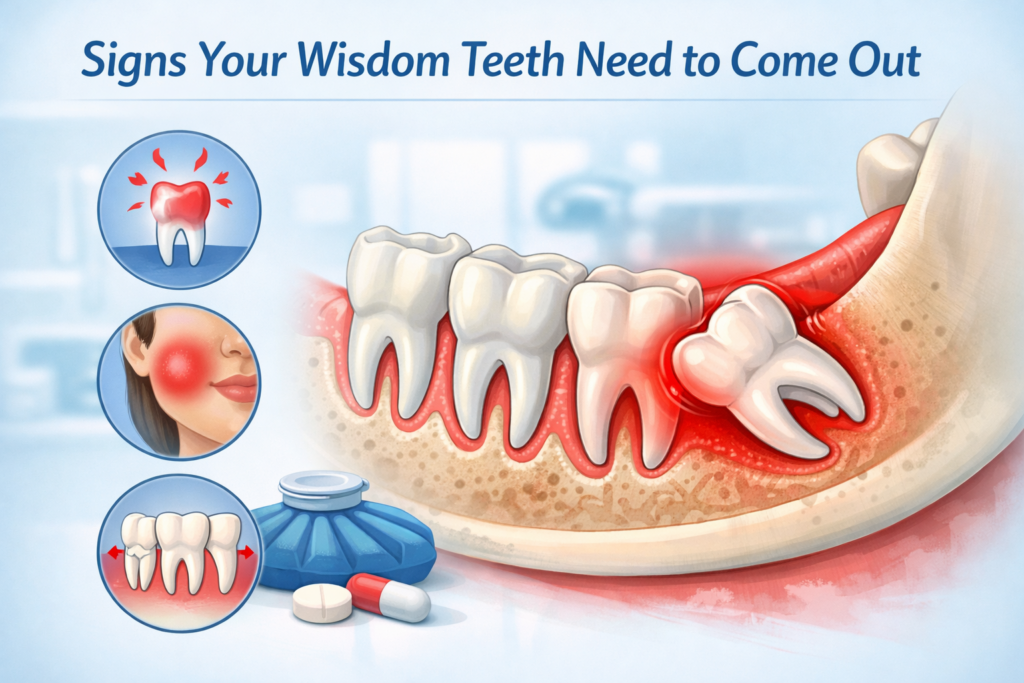
Wisdom teeth are the last set of teeth to develop, typically emerging between the ages of 17 and 25. For some people, they come in without issues. For many others, there simply is not enough room in the jaw to accommodate them, leading to impaction, pain, infection, and damage to neighbouring teeth.
7 Signs Your Wisdom Teeth May Need to Be Removed
Pain or Tenderness at the Back of Your Mouth
A dull, persistent ache at the very back of your jaw is one of the earliest signs. This pain tends to intensify as the wisdom teeth push against surrounding structures.
Swollen, Red, or Tender Gums Behind Your Last Molars
A partially erupted wisdom tooth creates a flap of gum tissue that traps food and bacteria, leading to pericoronitis — swelling, redness, and pain that can affect your ability to open your mouth or eat.
Jaw Stiffness or Difficulty Opening Your Mouth
Impacted wisdom teeth can press against nerves, causing stiffness and tension. In some cases, this mimics or contributes to TMJ symptoms.
Crowding or Shifting of Your Other Teeth
Wisdom teeth exert pressure on existing teeth, causing them to shift. This is especially frustrating for patients who previously had braces or Invisalign.
Recurring Infections or Abscess Formation
Partially erupted wisdom teeth create pockets where bacteria thrive, leading to repeated infections with swelling, bad taste, pus, or fever.
A Cyst on the X-Ray
During routine X-rays, your dentist may identify a cyst forming around an impacted wisdom tooth. Left untreated, cysts can damage bone, surrounding teeth, and nerves.
Damage to Neighbouring Teeth
Impacted wisdom teeth growing at an angle can press against adjacent molars, causing root resorption, cavities, and weakened tooth structure.
What Happens If You Wait Too Long?
Delaying extraction when problems have been identified can lead to:
– Worsening infections that spread to the jawbone
– Increased difficulty of the extraction as roots develop further
– Greater risk of nerve damage in older patients
– Damage requiring additional restorative work such as crowns or fillings
– Longer recovery times
Wisdom tooth removal is generally easier when performed between ages 17 and 25, before roots have fully formed.
What Does Wisdom Tooth Removal Involve?
The wisdom tooth removal procedure varies depending on whether teeth have erupted or are impacted. For erupted teeth, the extraction is similar to a standard tooth extraction. For impacted teeth, a small incision may be needed.
Sedation options are available for anxious patients, from nitrous oxide to IV sedation.
When Should You See a Dentist?
If you are experiencing any of these symptoms, schedule an evaluation. Even without pain, routine X-rays during regular dental checkups can reveal developing problems.
If you are dealing with sudden, severe tooth pain, learn how to manage it before your appointment.
Contact Affinity Dental to book a wisdom tooth evaluation at our Bridgwater or Henderson Highway location.
Sources:
– Canadian Dental Association – Wisdom Teeth
– Mayo Clinic – Impacted Wisdom Teeth