
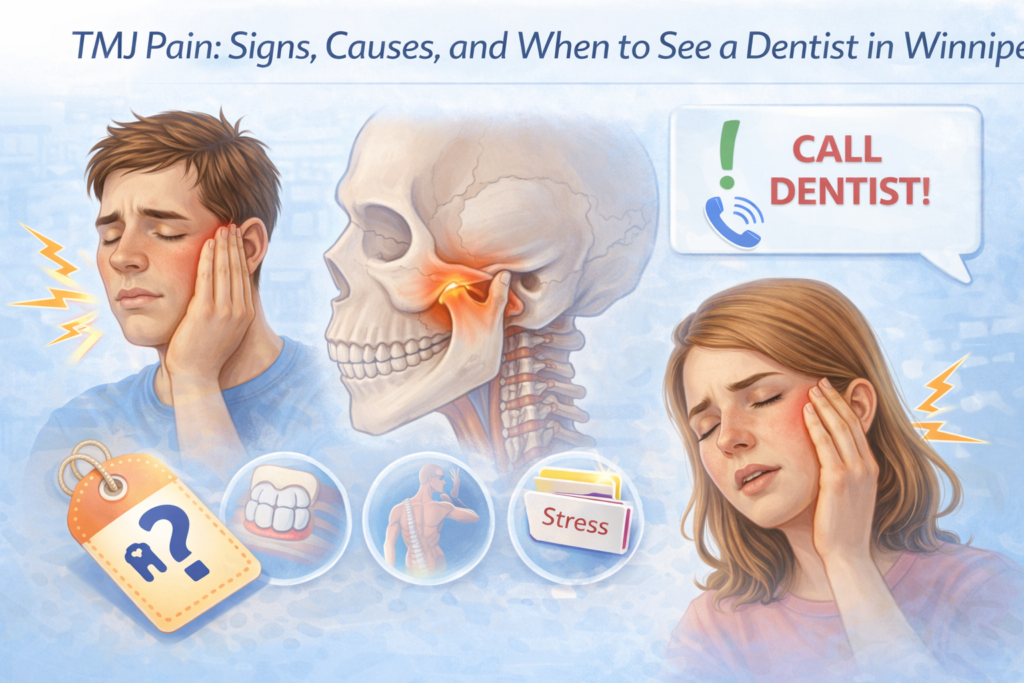
TL;DR
- TMJ pain can show up as jaw soreness, popping, headaches, or facial tension.
- Symptoms may get worse with stress, clenching, grinding, or bite strain.
- A dental assessment can help confirm whether TMJ treatment makes sense.
TMJ Symptoms at a Glance
| Symptom | What It May Suggest |
|---|---|
| Jaw pain or stiffness | Possible TMJ irritation |
| Clicking or popping | Jaw joint strain or imbalance |
| Headaches or facial tension | Muscle overuse or clenching |
TMJ Disorders Affect Millions of People
If you experience jaw pain, clicking sounds when you open your mouth, or frequent headaches, you may be dealing with a temporomandibular joint (TMJ) disorder. TMJ disorders, also called TMD, can range from mild discomfort to severe, chronic pain that affects your ability to eat, speak, and sleep.
Understanding the signs, causes, and treatment options can help you find relief and prevent the condition from worsening.
At Affinity Dental, we provide TMJ treatment in Winnipeg to help patients manage pain and restore normal jaw function.
What Is TMJ?
The temporomandibular joint (TMJ) is the hinge that connects your jaw to your skull. It allows you to open and close your mouth, chew, speak, and yawn.
TMJ disorder (TMD) occurs when this joint or the surrounding muscles become inflamed, misaligned, or damaged. The result can be pain, limited movement, and other uncomfortable symptoms.
Common Signs and Symptoms of TMJ Disorders
TMJ symptoms can vary widely from person to person. Some people experience mild, occasional discomfort, while others deal with chronic, debilitating pain.
Common signs include:
- Pain or tenderness in the jaw, face, neck, or shoulders
- Clicking, popping, or grinding sounds when opening or closing your mouth
- Difficulty or pain when chewing
- Jaw that gets stuck or locks in an open or closed position
- Frequent headaches or migraines
- Earaches or a feeling of fullness in the ears
- Facial swelling
- Changes in how your upper and lower teeth fit together
If you experience any of these symptoms, it is worth seeing a dentist for an evaluation.
What Causes TMJ Disorders?
TMJ disorders can develop for a variety of reasons, and in many cases, the exact cause is unclear. However, several factors are known to contribute:
Teeth Grinding (Bruxism)
Grinding or clenching your teeth, especially at night, puts excessive pressure on the jaw joint and can lead to TMJ pain.
Stress and Tension
Stress can cause you to tighten your jaw muscles unconsciously, leading to pain and inflammation over time.
Jaw Injury or Trauma
A blow to the jaw, whiplash, or other injury can damage the TMJ or surrounding tissues.
Arthritis
Osteoarthritis or rheumatoid arthritis in the jaw joint can cause pain, stiffness, and inflammation.
Misaligned Bite
If your teeth do not fit together properly, it can put strain on the jaw joint. In some cases, dental crowns or bridges may be needed to correct the alignment.
Poor Posture
Slouching or forward head posture can strain the muscles of the jaw and neck, contributing to TMJ pain.
Home Remedies and Self-Care for TMJ Pain
For mild TMJ symptoms, you may find relief with these at-home strategies:
- Apply a warm or cold compress to the jaw for 10 to 15 minutes
- Eat soft foods and avoid chewing gum or hard, chewy foods
- Practice relaxation techniques to reduce stress and jaw tension
- Gently massage the jaw muscles
- Avoid extreme jaw movements, such as wide yawning or singing
- Maintain good posture, especially when sitting at a desk or using a computer
- Take over-the-counter pain relievers such as ibuprofen or acetaminophen
While these strategies can help, they are not a substitute for professional treatment if your symptoms persist or worsen.
When to See a Dentist for TMJ Pain
You should see a dentist if:
- Your jaw pain lasts more than a few days
- You have difficulty opening or closing your mouth
- You experience frequent headaches or earaches
- Home remedies are not providing relief
- Your symptoms are affecting your ability to eat, speak, or sleep
Early intervention can prevent TMJ disorders from becoming chronic and more difficult to treat.
If dental anxiety is holding you back from seeking treatment, we offer sedation options in Winnipeg to help you feel comfortable.
Professional Treatment Options for TMJ Disorders
At Affinity Dental, we tailor treatment to each patient’s needs. Depending on the severity of your condition, treatment may include:
Custom Nightguards or Splints
A custom-fitted nightguard can prevent teeth grinding and reduce pressure on the jaw joint while you sleep.
Physical Therapy
Exercises to stretch and strengthen the jaw muscles can improve mobility and reduce pain.
Bite Adjustment
If a misaligned bite is contributing to TMJ pain, your dentist may recommend orthodontics, crowns, or other restorative work to correct the alignment.
Medications
Anti-inflammatory medications, muscle relaxants, or pain relievers may be prescribed to manage symptoms.
Injections
In some cases, corticosteroid injections or Botox may be used to relieve muscle tension and reduce pain.
Surgery (Rare)
Surgery is typically a last resort and is only considered if conservative treatments have failed and the condition is severe.
Preventing TMJ Disorders
While not all TMJ disorders can be prevented, you can reduce your risk by:
- Managing stress through relaxation techniques, exercise, or counselling
- Avoiding habits like nail-biting, pen-chewing, or excessive gum chewing
- Maintaining good posture, especially when working at a computer
- Wearing a nightguard if you grind your teeth
- Addressing dental issues like misalignment or missing teeth promptly
Do Not Ignore TMJ Pain
TMJ disorders can significantly impact your quality of life, but the good news is that most cases can be managed with the right treatment. The sooner you seek help, the better your chances of finding relief.
If you are experiencing jaw pain, clicking, or other TMJ symptoms, contact Affinity Dental to schedule an evaluation at our Bridgwater or Henderson Highway location in Winnipeg.
Need Relief From Jaw Pain?
If TMJ symptoms are affecting your sleep, comfort, or daily routine, Affinity Dental can help you explore treatment options.
Learn About TMJ Treatment in Winnipeg
FAQs
How do I know if my jaw pain is TMJ-related?
Jaw soreness, clicking, limited movement, and morning tension can all point to TMJ involvement.
Can TMJ symptoms come and go?
Yes. Many patients notice flare-ups related to stress, clenching, or certain habits.
When should I see a dentist about TMJ pain?
If symptoms are frequent, painful, or affecting eating and sleep, it is worth booking an evaluation.