
TL;DR
- Gum disease often starts with bleeding, tenderness, swelling, or plaque buildup that is easy to overlook.
- Early-stage gum problems are much easier to manage than advanced gum disease.
- Prompt dental care can help protect both your gums and your teeth.
Gum Health Quick Check
| Sign | Why It Matters |
|---|---|
| Bleeding gums | Often an early warning sign of irritation or disease |
| Recession or tenderness | May signal progressing gum problems |
| Next step | Book preventive dental care in Winnipeg |
The Answer Depends on How Early the Problem Is Caught
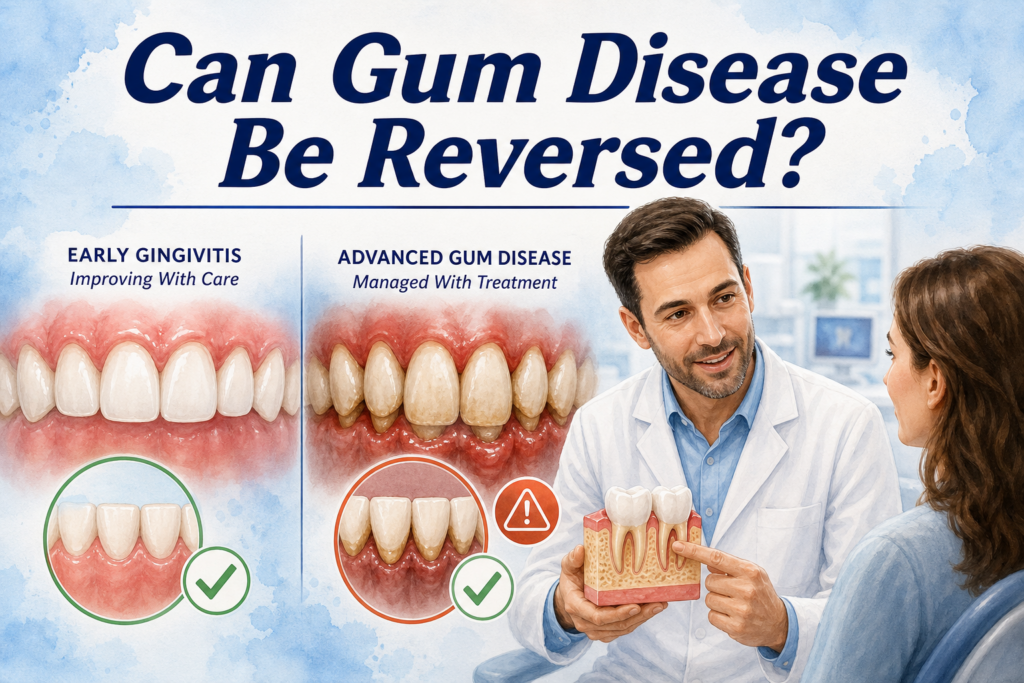
When patients hear the words gum disease, one of the first things they want to know is whether the damage can be undone. The honest answer is that it depends on the stage. Early gum disease, called gingivitis, can usually be reversed. More advanced gum disease, called periodontitis, cannot be fully reversed, but it can often be controlled before it causes more serious damage.
The biggest factor is timing. The sooner inflammation is recognized and treated, the better the outcome tends to be. That is why it helps to understand the early warning signs and not wait until the problem becomes painful or severe.
If you are concerned about your gum health, professional dental cleanings in Winnipeg and an exam are usually the best place to start.
When Gum Disease Can Be Reversed
Gingivitis is the earliest stage of gum disease. At this point, plaque and bacteria irritate the gum tissue, causing redness, tenderness, or bleeding when you brush or floss. The good news is that gingivitis has not yet caused the deeper structural damage seen in periodontitis.
- A professional cleaning to remove plaque and tartar
- Better brushing and flossing at home
- More consistent recall visits
- Sometimes an antimicrobial rinse if your dentist recommends it
If you are seeing symptoms now, our article on early signs of gum disease you should not ignore can help you spot them more clearly.
When Gum Disease Cannot Be Fully Reversed
Once the infection progresses to periodontitis, the issue becomes more serious. At that point, the gums can start pulling away from the teeth, pockets can form, and the bone supporting the teeth may begin to break down. That damage is not considered reversible in the same way gingivitis is.
What is possible is control. With the right treatment and follow-up, many patients are able to stabilize their gums, slow the progression, and keep their natural teeth much longer.
If you want to understand the difference in more detail, read gingivitis vs periodontitis: stages of gum disease.
What Treatment Usually Involves
Treatment depends on how advanced the disease is. Mild cases may improve with a thorough cleaning and better home care. More advanced cases may need deeper cleaning below the gum line, more frequent maintenance visits, or referral for specialized periodontal treatment.
Your dentist may also look at contributing issues such as smoking, dry mouth, diabetes, grinding, or restorations that make certain areas harder to clean. In severe cases, teeth that cannot be saved may eventually need replacement with dental implants or dentures.
What You Can Do at Home
- Brush twice a day with fluoride toothpaste
- Floss every day
- Use an electric toothbrush if you struggle with manual brushing
- Stay current with exams and cleanings
- Avoid smoking or vaping if possible
Diet can matter too. Sugar, acidity, and dry mouth can make inflammation harder to control. For a helpful related read, see the worst foods and beverages for your teeth.
When to Book an Appointment
Bleeding gums are easy to dismiss, but they are not something to ignore. Persistent bad breath, gum tenderness, visible recession, or teeth that feel different when you bite can also point to a problem that should be checked. The longer gum disease continues untreated, the more likely it is to affect the structures that hold your teeth in place.
If you are not sure whether your symptoms are mild or more urgent, our article on signs it is time to see a dentist even if nothing hurts can help you decide.
FAQs About Gum Disease
Can bleeding gums go away on their own?
Sometimes short-term irritation settles down, but repeated bleeding is a sign something needs attention. It is better to treat the cause than wait and hope.
How long does it take to reverse gingivitis?
Many patients see improvement within a few weeks once plaque is removed and home care improves, though the exact timeline varies.
Can you have gum disease without pain?
Yes. That is one reason gum disease is often missed early. Symptoms can start quietly before becoming more obvious.
Ready to Protect Your Gum Health?
If your gums bleed, feel tender, or seem to be changing, Affinity Dental can help you figure out what is going on and what to do next. Learn more about dental cleanings and general dentistry, or contact our Winnipeg team to book an appointment.
Concerned About Gum Health?
Affinity Dental can help you catch gum disease early and build a treatment plan that protects your teeth and gums long-term.