
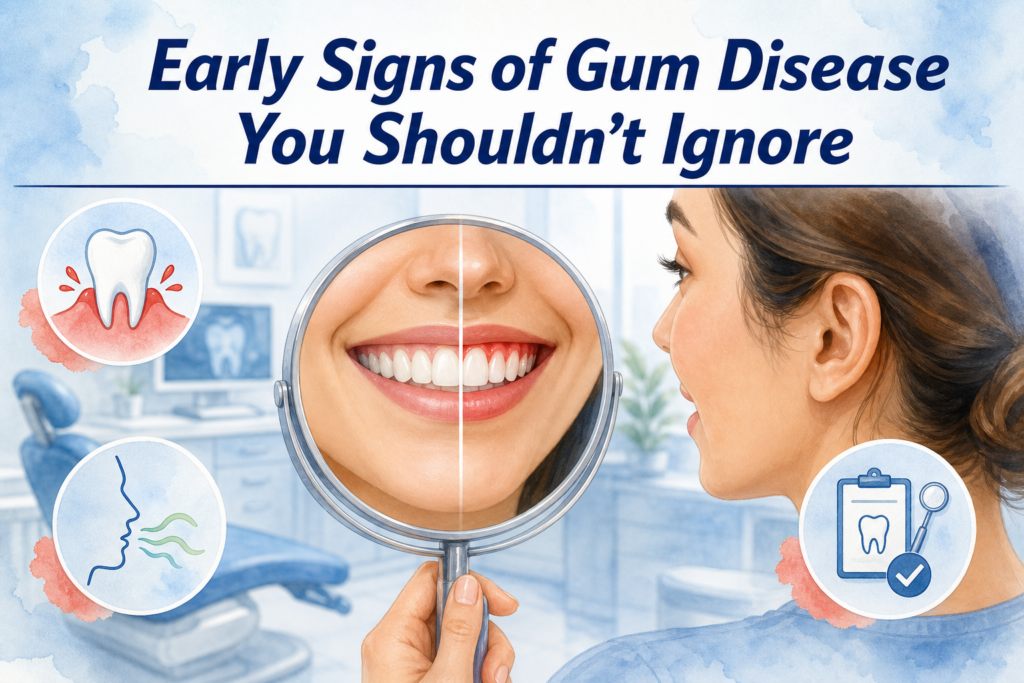
TL;DR
- Gum disease often starts with bleeding, tenderness, swelling, or plaque buildup that is easy to overlook.
- Early-stage gum problems are much easier to manage than advanced gum disease.
- Prompt dental care can help protect both your gums and your teeth.
Gum Health Quick Check
| Sign | Why It Matters |
|---|---|
| Bleeding gums | Often an early warning sign of irritation or disease |
| Recession or tenderness | May signal progressing gum problems |
| Next step | Book preventive dental care in Winnipeg |
Gum Disease Usually Starts Quietly
One reason gum disease becomes such a common problem is that it rarely starts with dramatic pain. The earliest signs are often easy to brush off: a little bleeding when you floss, gums that look slightly redder than usual, or breath that never seems as fresh as it should.
Because those symptoms can seem small, many people wait until the issue becomes harder to ignore. By then, the inflammation may have had more time to progress.
If you can spot the early signs and act early, there is a much better chance of stopping the problem before it causes deeper damage. That is especially true when you pair good home care with regular dental cleanings in Winnipeg.
1. Bleeding When You Brush or Floss
Bleeding gums are one of the most common warning signs of gingivitis, the earliest stage of gum disease. Healthy gums generally do not bleed during normal brushing and flossing. If you notice blood regularly, it is worth paying attention.
For a closer look at this symptom, Affinity Dental also has a guide on bleeding gums, causes, and treatment.
2. Red, Puffy, or Tender Gums
Healthy gums usually look firm and pink. Inflamed gums may look darker, feel swollen, or seem more sensitive when you brush. Even if it does not hurt much, tenderness can be a sign that plaque buildup is irritating the tissue around the teeth.
3. Bad Breath That Keeps Coming Back
Morning breath is normal. Persistent bad breath that does not improve with brushing, flossing, or mouthwash can be a sign that bacteria are building up along the gum line or in deeper pockets around the teeth.
4. Gums That Seem to Pull Away From the Teeth
If your teeth look longer than they used to or certain spots feel more sensitive, gum recession may be starting. Recession can happen for different reasons, but gum disease is one possibility your dentist may want to rule out.
As recession and inflammation progress, the problem can move beyond gingivitis. If you want to understand that difference, read gingivitis vs periodontitis.
5. A Different Feeling When You Bite or Clean Between Teeth
Sometimes the earliest clue is not visual at all. Patients may notice that floss catches more easily, food traps more often, or one area feels slightly off when biting down. Those subtle changes can be signs that the gums are irritated or beginning to change shape around the teeth.
What to Do If You Notice These Symptoms
The good news is that early gum disease can often be reversed when caught soon enough. Professional cleaning removes plaque and tartar that brushing alone cannot handle, and your dentist can help you figure out whether you are dealing with simple gingivitis or something more advanced.
If you are wondering about the long-term outlook, our article on whether gum disease can be reversed explains what is possible at each stage.
How to Lower Your Risk Going Forward
- Brush twice a day with fluoride toothpaste
- Floss daily
- Keep up with professional cleanings
- Cut back on smoking or vaping if possible
- Pay attention to diet and dry mouth
Preventive visits matter because they give your dental team a chance to spot gum changes early, before you are dealing with more invasive treatment. If you are still looking for a long-term dental home, read how to choose a family dentist in Winnipeg.
FAQs About Early Gum Disease
Can gingivitis hurt?
It can, but it often starts with little or no pain. That is why patients miss it so easily.
How quickly can early gum disease improve?
Many mild cases improve noticeably within a few weeks once plaque is removed and home care becomes more consistent.
Do I need to see a dentist if my gums only bleed a little?
If it keeps happening, yes. Recurring bleeding is not something to ignore.
Ready to Have Your Gums Checked?
If your gums bleed, feel tender, or seem different than usual, Affinity Dental can help you catch the problem early. Learn more about dental cleanings, general dentistry, and family dental care, or contact our Winnipeg team to book an appointment.
Seeing Early Warning Signs in Your Gums?
Affinity Dental can assess bleeding, tenderness, and plaque buildup before they turn into bigger oral health problems.