
TL;DR
- Tooth extractions can be straightforward or more involved depending on the tooth and the reason for removal.
- Healing guidance matters because pain, swelling, and dry socket risk can all affect recovery.
- If symptoms worsen instead of improving, it is worth getting checked quickly.
Tooth Extraction Snapshot
| Topic | Short Takeaway |
|---|---|
| Normal recovery | Mild soreness and gradual improvement |
| Warning sign | Pain that gets worse instead of better |
| Next step | Contact a Winnipeg dentist if healing feels off |
Some Discomfort Is Normal After an Extraction. Intense Pain Is Not.
After a tooth is removed, most patients expect some soreness, swelling, and mild bleeding. That is part of the normal healing process. What worries people is when the pain suddenly feels sharper, stronger, or different a few days later. In many cases, that is the moment they start wondering whether they are healing normally or dealing with dry socket.
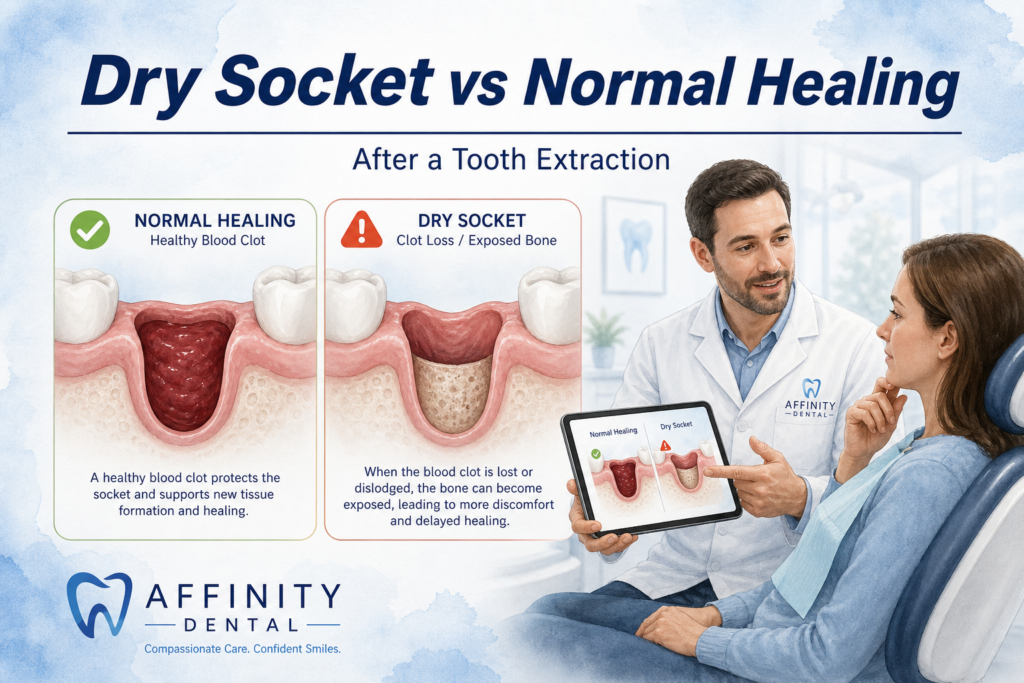
Dry socket happens when the blood clot protecting the extraction site either does not form properly or becomes dislodged too soon. Without that clot in place, the bone and nerves underneath are left exposed, which can make everyday things like drinking water, talking, or chewing feel surprisingly painful.
If you recently had a tooth extraction in Winnipeg, knowing the difference between normal healing and dry socket can help you respond quickly and avoid a rougher recovery than necessary.
What Normal Healing Usually Looks Like
In the first 24 hours after an extraction, it is normal to notice light bleeding, tenderness, and swelling around the area. The blood clot that forms in the socket is an important part of healing. It protects the site and gives your body a foundation to build new tissue.
- Pain gradually improves instead of worsening
- Swelling peaks early, then slowly settles down
- The extraction site looks dark or covered because the clot is still in place
- Jaw soreness becomes more manageable each day
If you want a broader overview of recovery, Affinity Dental also has a guide on what to expect when having a tooth extracted.
What Dry Socket Feels Like
Dry socket usually shows up two to five days after the extraction. Instead of the pain steadily fading, it becomes more intense. Patients often describe it as a deep, throbbing ache that radiates toward the ear, temple, or jaw on the same side.
- Pain that gets worse after initially feeling manageable
- A bad taste or unpleasant smell in your mouth
- A socket that looks empty or white instead of dark with a clot
- Pain that does not respond well to basic home care
If you are also dealing with swelling, fever, or signs of infection, that can point to a different problem and should be checked right away. Our article on what counts as a dental emergency can help you judge the urgency.
Why Dry Socket Happens
Dry socket is more likely when the clot gets disturbed too early. That can happen from smoking, using a straw, aggressive rinsing, spitting forcefully, or heavy physical activity too soon after the procedure. Some patients are simply more prone to it depending on the complexity of the extraction and their overall healing response.
Wisdom tooth removal can carry a higher risk, especially when the tooth was impacted or the extraction was more involved. If that is your situation, our article on how to know if your wisdom teeth need to come out offers more context on when extractions become necessary.
How to Reduce Your Risk After an Extraction
- Avoid smoking and vaping
- Do not drink through a straw
- Stick to soft foods for the first part of recovery
- Rinse gently only when your dentist says it is safe
- Take it easy with exercise and lifting
If you feel nervous about extractions or recovery in general, it can also help to understand what to expect during sedation dentistry when comfort support is part of your treatment plan.
When to Call Your Dentist
You do not need to guess your way through severe post-extraction pain. If the discomfort is getting stronger instead of weaker, or if the site looks unusual, it is worth calling. Dry socket is treatable, and the sooner it is addressed, the sooner you can get comfortable again.
Prompt evaluation is especially important if pain is interfering with sleep, radiating into your jaw or ear, or showing up alongside swelling that seems out of proportion. In some situations, the problem may need emergency dental care in Winnipeg.
FAQs About Dry Socket
How common is dry socket?
It is not the most common outcome after an extraction, but it is common enough that dentists routinely warn patients about it, especially after wisdom tooth removal.
Can dry socket heal on its own?
It will eventually heal, but that does not mean you should wait it out. Treatment can make a big difference in pain control and recovery comfort.
Does every extraction pain mean dry socket?
No. Mild to moderate soreness is normal. The key warning sign is pain that intensifies after the first day or two instead of calming down.
Need an Extraction Follow-Up?
If you are worried your extraction site is not healing the way it should, Affinity Dental can help. Our team provides tooth extraction care, wisdom tooth removal, and emergency dental services in Winnipeg. Contact Affinity Dental to book an appointment at our Bridgwater or Henderson Highway clinic.