
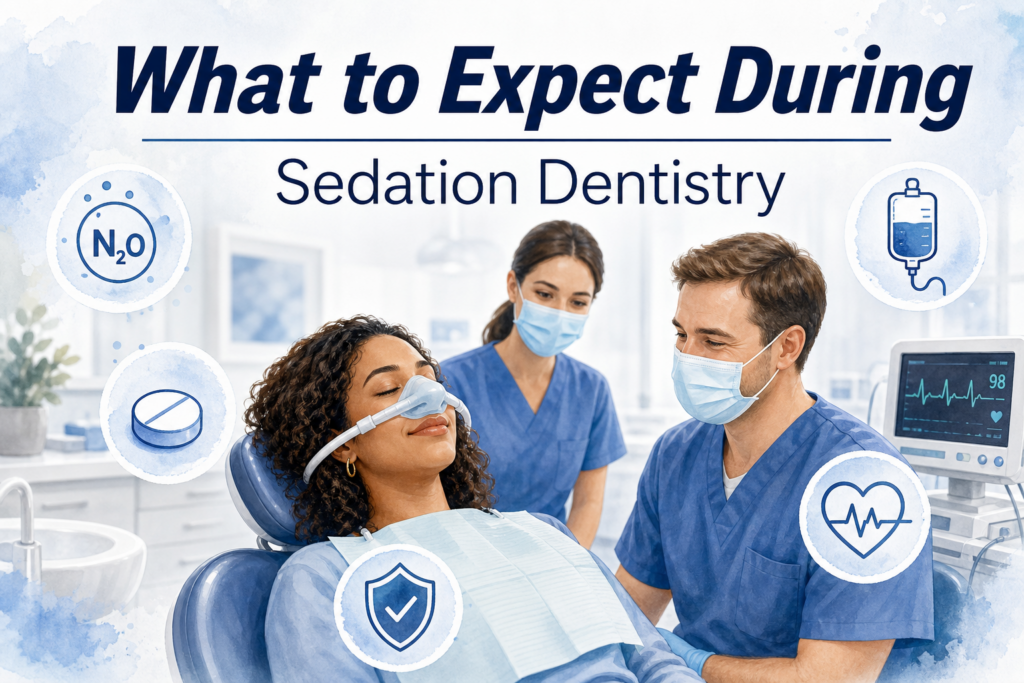
TL;DR
- Dental sedation can help patients feel calmer and more comfortable during treatment.
- The best option depends on your anxiety level, health history, and the procedure being planned.
- A consultation helps confirm whether sedation is appropriate for you.
Sedation Dentistry Summary
| Topic | What to Expect |
|---|---|
| Who may benefit? | Patients with dental anxiety or longer procedures |
| Why it helps | Makes treatment feel more manageable and comfortable |
| Next step | Discuss sedation options with a Winnipeg dentist |
Dental Anxiety Is Common. Sedation Dentistry Is Meant to Help.
For some patients, dental fear shows up as mild nervousness before an appointment. For others, it is strong enough to delay care for months or even years. Sedation dentistry exists to make treatment more manageable when anxiety, a strong gag reflex, or longer procedures make standard visits harder than they should be.
One of the biggest reasons patients avoid sedation is simple uncertainty. They are not sure what it feels like, how awake they will be, or what happens afterward. Knowing the process in advance can make the decision much easier.
If you are considering sedation dentistry in Winnipeg, here is what to expect before, during, and after your appointment.
Before Your Appointment
The first step is a conversation. Your dentist will review your medical history, medications, anxiety level, and the type of treatment you are having. That helps determine whether nitrous oxide, oral sedation, or IV sedation makes the most sense.
Different procedures call for different levels of support. A routine visit may only need light sedation, while a longer appointment such as wisdom tooth removal, oral surgery, or multiple tooth extractions may call for something deeper.
What the Different Sedation Options Feel Like
Nitrous Oxide
Nitrous oxide, often called laughing gas, is inhaled through a small mask. It works quickly and helps you feel calmer while remaining awake and able to respond normally.
Oral Sedation
Oral sedation involves taking medication before the visit. You stay awake, but you usually feel much more relaxed and less focused on the procedure. Some patients feel drowsy and remember very little afterward.
IV Sedation
IV sedation provides a deeper level of relaxation and is often used for more complex treatment or more severe anxiety. Many patients feel like the appointment passed very quickly, even if the procedure itself took longer.
What Happens During the Procedure
During sedation dentistry, your dental team monitors you carefully. Depending on the level of sedation, that can include checking your oxygen levels, heart rate, and blood pressure throughout the visit. The goal is comfort without losing control of safety.
You may still hear sounds or notice pressure, but patients often find that the experience feels much less stressful than a standard appointment. That can be especially helpful for treatments that already cause anxiety, such as root canal treatment or care related to a dental emergency.
What Recovery Is Like After Sedation
Recovery depends on the type of sedation used. With nitrous oxide, the effects usually wear off quickly. With oral or IV sedation, you may feel sleepy, groggy, or slightly unsteady afterward, which is why driving yourself home is usually not an option.
Most patients are advised to rest for the remainder of the day after deeper sedation. If your procedure involved an extraction, you may also want to review dry socket vs normal healing after a tooth extraction so you know what kind of recovery is expected.
Who Sedation Dentistry Can Help
- Avoid dental visits because of fear
- Need longer or more involved procedures
- Have a strong gag reflex
- Struggle to get numb or stay relaxed during treatment
- Want a smoother experience for oral surgery or extractions
It can also help patients who have postponed needed care until the problem became more advanced. If anxiety has kept you away from cleanings, that delay can sometimes contribute to issues like early gum disease symptoms or worsening decay.
FAQs About Sedation Dentistry
Will I be asleep during sedation dentistry?
Usually not completely asleep. Most dental sedation keeps you deeply relaxed rather than fully unconscious, though the exact experience depends on the type used.
Is sedation dentistry safe?
For appropriate candidates, sedation dentistry is widely used and carefully monitored. Your dentist will review your health history first to make sure the option fits you well.
Can children receive sedation?
In some cases, yes. The right approach depends on the child, their anxiety level, and the treatment being done.
Ready to Talk About Comfort Options?
If fear, stress, or a difficult past experience has made it harder to get the care you need, Affinity Dental can help you explore a better way forward. Learn more about sedation dentistry, wisdom tooth removal, and emergency dental care, or contact our Winnipeg team to schedule an appointment.
Want a More Comfortable Dental Experience?
If dental anxiety has been holding you back, Affinity Dental can help you understand your sedation options and what to expect.