
TL;DR
- Invisalign can be a good option for patients who want discreet orthodontic treatment.
- It is often compared with braces, but not every case is treated the same way.
- A consultation helps confirm whether Invisalign fits your smile goals and bite needs.
Invisalign Quick Guide
| Topic | What to Expect |
|---|---|
| Appearance | Clear aligners instead of brackets and wires |
| Best for | Patients looking for a more discreet straightening option |
| Next step | Book an Invisalign consultation in Winnipeg |
Choosing Between Invisalign and Braces Depends on Your Goals and Lifestyle
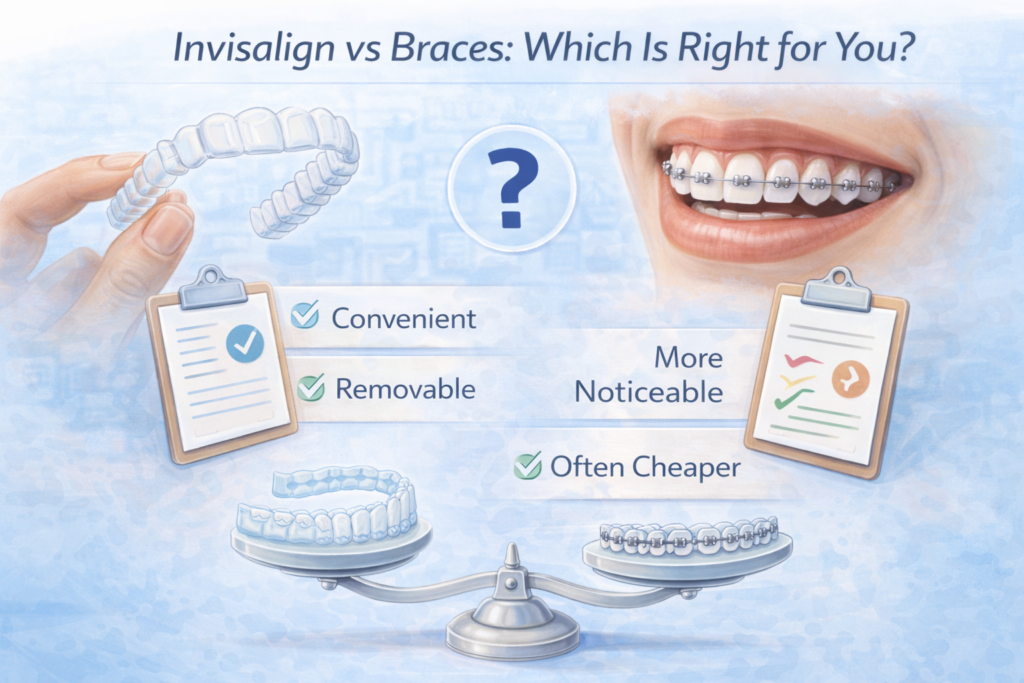
If you are considering orthodontic treatment, one of the first decisions you will face is whether to choose traditional braces or Invisalign clear aligners. Both options can straighten your teeth and improve your bite, but they work in different ways and come with unique pros and cons.
Understanding the differences can help you make the best choice for your smile, budget, and lifestyle.
At Affinity Dental, we offer Invisalign treatment in Winnipeg, including free consultations to help you explore your options.
How Invisalign Works
Invisalign uses a series of custom-made, clear plastic aligners to gradually shift your teeth into their desired position. Each aligner is worn for about one to two weeks before moving to the next set in the series.
The aligners are removable, which means you can take them out to eat, brush, and floss. However, for the best results, you should wear them 20 to 22 hours per day.
Invisalign is nearly invisible, making it a popular choice for adults and teens who want a more discreet orthodontic option.
How Traditional Braces Work
Traditional braces consist of metal or ceramic brackets that are bonded to the teeth and connected by a wire. The wire is periodically adjusted by your orthodontist to move the teeth into alignment.
Braces are fixed, meaning they cannot be removed until treatment is complete. While they are more noticeable than Invisalign, modern braces are smaller and more comfortable than ever before.
Invisalign vs Braces: Pros and Cons
Appearance
Invisalign: Clear aligners are nearly invisible, making them ideal for people who are self-conscious about wearing braces.
Braces: Metal braces are more noticeable, though ceramic braces blend better with your teeth.
Comfort
Invisalign: Smooth plastic aligners are generally more comfortable and less likely to irritate your gums and cheeks.
Braces: Brackets and wires can cause irritation, especially after adjustments.
Convenience
Invisalign: Removable aligners make eating and cleaning your teeth easier. No food restrictions.
Braces: Fixed appliances require you to avoid certain foods (popcorn, sticky candy, hard nuts) and make brushing and flossing more challenging.
Effectiveness
Invisalign: Works well for mild to moderate misalignment. May not be suitable for complex cases involving severe crowding, rotation, or bite issues.
Braces: Can treat a wider range of orthodontic issues, including complex cases that Invisalign cannot address.
Treatment Time
Invisalign: Average treatment time is 12 to 18 months, though it can vary based on the complexity of your case.
Braces: Typically take 18 to 24 months, but can be shorter or longer depending on the severity of misalignment.
Compliance
Invisalign: Requires discipline. Since the aligners are removable, you must wear them consistently for 20+ hours per day. Poor compliance can delay results.
Braces: Fixed appliances mean no compliance issues—treatment progresses as planned.
Cost Comparison: Invisalign vs Braces
The cost of orthodontic treatment in Winnipeg varies based on the complexity of your case and the length of treatment.
Invisalign: Typically costs between $4,000 and $8,000.
Traditional Braces: Generally range from $3,000 to $7,000.
In many cases, the cost difference is minimal. Some insurance plans cover both Invisalign and braces, so it is worth checking your benefits before making a decision.
Who Is a Good Candidate for Invisalign?
Invisalign is a great option if:
- You have mild to moderate crowding, gaps, or misalignment
- You want a discreet treatment option
- You are willing to wear the aligners 20+ hours per day
- You prefer the flexibility to remove your aligners for eating and special occasions
- You are a responsible teen or adult who will follow the treatment plan
If you have had braces in the past and your teeth have shifted, Invisalign can be an excellent way to restore your smile. Read more in our article on how Invisalign can bring your smile back.
Who Is a Good Candidate for Braces?
Braces may be the better choice if:
- You have severe crowding, rotation, or bite issues
- You prefer not to worry about compliance or removing aligners
- You are looking for the most cost-effective option
- Your orthodontist recommends braces for your specific case
Lifestyle Factors to Consider
Your daily routine and lifestyle can play a big role in which option is right for you.
If you play contact sports: Invisalign may be more convenient since you can remove the aligners during play and wear a mouthguard. Braces can be worn with a mouthguard designed for orthodontic appliances.
If you are in a professional setting: Invisalign may be more appealing if you want to maintain a polished appearance without visible braces.
If you have a busy schedule: Invisalign requires fewer office visits for adjustments, though you will still need regular check-ins to monitor progress.
Can Invisalign Fix Everything Braces Can?
Not quite. While Invisalign has come a long way and can address many orthodontic issues, traditional braces are still the gold standard for complex cases. These include:
- Severe overbites, underbites, or crossbites
- Large gaps or significant crowding
- Teeth that need to be rotated or moved vertically
Your dentist or orthodontist can evaluate your case and recommend the best treatment option.
Other Smile-Enhancing Options
If your main concern is the appearance of your smile rather than alignment, you may also want to consider dental veneers, which can mask minor imperfections without the need for braces or aligners.
Why Affinity Dental Offers Free Invisalign Consultations
At Affinity Dental, we believe everyone deserves access to the information they need to make confident decisions about their smile. That is why we offer free Invisalign consultations.
During your consultation, we will:
- Evaluate your teeth and bite
- Discuss your goals and concerns
- Explain whether Invisalign or braces is the best option for you
- Provide a transparent cost estimate and discuss financing options
The Bottom Line: It Depends on Your Needs
There is no one-size-fits-all answer when it comes to Invisalign vs braces. The right choice depends on the complexity of your case, your lifestyle, your budget, and your personal preferences.
Both options are effective at straightening teeth and improving oral health. The key is to work with a trusted provider who can guide you toward the treatment that will give you the best results.
Schedule Your Free Invisalign Consultation
If you are curious about Invisalign or want to explore your orthodontic options, contact Affinity Dental to book a free consultation at our Bridgwater or Henderson Highway location in Winnipeg.
Ready to Straighten Your Smile?
Affinity Dental can help you compare clear aligners with other orthodontic options and decide whether Invisalign is the right fit.
Explore Invisalign in Winnipeg
FAQs
Is Invisalign better than braces?
It depends on the complexity of your case and your preference for appearance, comfort, and routine.
Can Invisalign fix teeth that shifted after braces?
In many cases, yes. A dentist can confirm whether clear aligners are appropriate for relapse.
Do I need to wear Invisalign all day?
Successful treatment usually depends on wearing the aligners for most of the day, as instructed.