
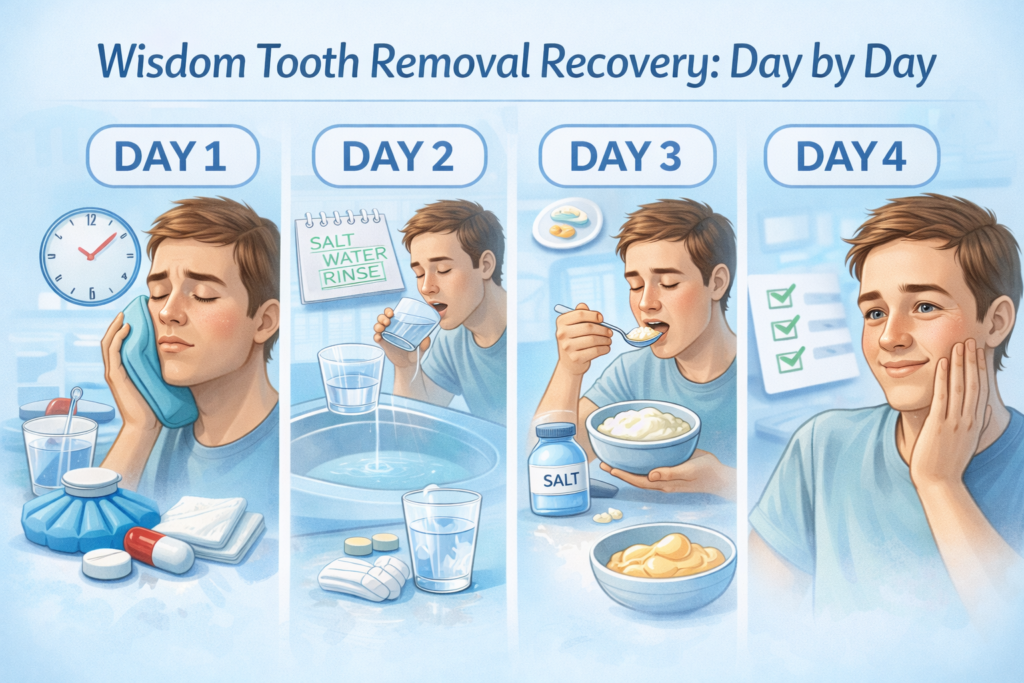
What to Expect After Wisdom Tooth Removal
Knowing what to expect during recovery helps you prepare and ensures the best possible healing. Most patients recover fully within 7 to 10 days after wisdom tooth removal.
Day 1: The Day of Surgery
Gauze pads will be placed over the extraction sites to control bleeding. Bite down gently but firmly. Replace the gauze every 30 to 45 minutes until bleeding slows.
What to Expect
- Numbness from the anesthetic will last 2 to 4 hours
- If you had sedation, you may feel groggy
- Some bleeding and oozing is normal for the first 12 to 24 hours
- Swelling may begin but usually peaks on days 2 and 3
What to Do
- Keep your head elevated, even when resting
- Apply ice packs to your cheeks, 20 minutes on, 20 minutes off
- Take prescribed pain medication before the anesthetic fully wears off
- Eat only soft, cold foods: yogurt, applesauce, smoothies (no straws)
- Do not rinse, spit forcefully, or use a straw as this can cause dry socket
Days 2 to 3: Peak Swelling
Swelling typically peaks around 48 to 72 hours. Your cheeks may look noticeably puffy, and you may have some bruising along the jawline.
- Continue ice packs for the first 48 hours, then switch to warm compresses
- Begin gentle salt water rinses after the first 24 hours
- Maintain a soft food diet: mashed potatoes, scrambled eggs, oatmeal, soup
- Stay hydrated and continue medications as directed
Days 4 to 5: Turning the Corner
Most patients feel noticeably better by day 4. Swelling starts to decrease, and pain should be lessening.
- Continue salt water rinses after meals
- Gradually reintroduce slightly firmer foods, but avoid anything crunchy, hard, or sticky
- You may be able to reduce to over-the-counter pain relief
- Do not smoke as it significantly increases the risk of dry socket
Days 6 to 7: Stitches and Checkup
Dissolvable stitches will begin to break down. Non-dissolvable stitches will be removed at your follow-up appointment. Pain should be minimal and swelling mostly resolved.
Days 7 to 14: Full Recovery
By the end of the second week, most patients are back to their normal routine.
When to Call Your Dentist
Contact Affinity Dental if you experience:
- Severe pain that worsens after day 3 (possible dry socket)
- Excessive bleeding that does not slow with gauze pressure
- Fever above 38 degrees Celsius
- Pus or foul-smelling discharge from the extraction site
- Persistent numbness or tingling in your lip, tongue, or chin
- Difficulty breathing or swallowing
Tips for a Smoother Recovery
- Prepare soft foods and ice packs before your surgery
- Arrange for someone to drive you home
- Avoid physical activity for at least 3 to 4 days
- Sleep with your head elevated on extra pillows
- Do not drink alcohol while taking prescription pain medication
What to Eat After Wisdom Tooth Removal
Knowing what to eat makes a real difference in comfort and healing. For detailed guidance, read our article on what to eat and avoid after oral surgery.
Good choices: yogurt, smoothies, applesauce, mashed potatoes, scrambled eggs, soup, oatmeal, pudding.
Avoid: chips, popcorn, nuts, seeds, spicy foods, hot foods, acidic foods.
Looking Ahead
Once fully healed, maintaining regular dental checkups will keep the rest of your teeth healthy. If you have been putting off other dental work due to anxiety, ask about sedation options for future visits.
Book your wisdom tooth consultation at Affinity Dental’s Bridgwater or Henderson Highway location.